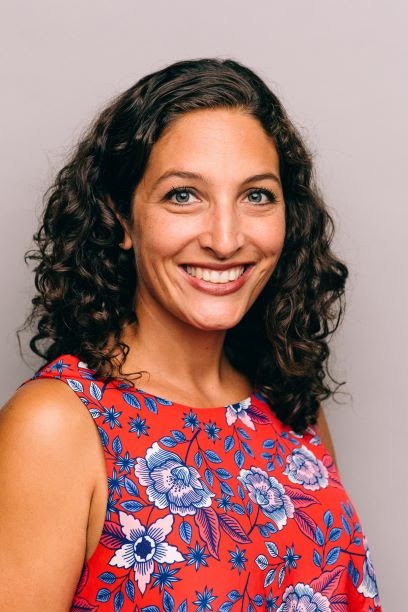
Maria Venetis
Dr. Maria Venetis (Ph.D., Rutgers, 2010) is an Associate Professor in the Communication Department at the School of Communication and Information at Rutgers University. Her research interests lie at the intersection of interpersonal and health communication, and she examines how individuals talk about health and the outcomes of these conversations. She examines patient-provider interactions and communicative practices within medical visits such as the connection between patient and companion question asking and stating of psychosocial outcomes such as satisfaction and adherence. Other work identifies specific patient disclosure strategies when sharing this medically relevant, non-visible, and potentially stigmatizing information. Dr. Venetis also studies how relational partners manage ongoing communication concerning cancer and other health conditions. Recent research includes communicative behaviors that promote resilience among relational partners and supportive communication during cancer care and during the COVID-19 pandemic. For example, some of her recently published research provides strategies for how to share information with friends in ways that will make the person sharing feel more supported - even when what that person is sharing may be something that people are judgmental about.

Kate Magsamen-Conrad
Dr. Kate Magsamen-Conrad (Ph.D., Rutgers University, 2012) is an Associate Professor in the Department of Communication Studies at The University of Iowa. She is an intervention scientist with a research agenda that prioritizes partnering with communities to solve problems. Among her community-engaged projects are a project funded by the Cancer Research UK to work with low-income urban mothers to improve physical activity, and an intergroup communication intervention that partners emerging, middle-aged, and older adults to improve the well-being of aging communities. Dr. Magsamen-Conrad’s research focuses on improving health (e.g., medical, physical, relational, etc.) for individuals across the lifespan through building and testing theoretical understanding of the role of interpersonal communication processes (e.g., information management, privacy) and mobile technology use (e.g., for health-information seeking, eHealth literacy), particularly in family contexts. Investigating barriers and facilitators to digital device use and adoption has been a major part of her research program since 2012. She utilizes multi-study, mixed-methods, longitudinal investigations to examine how mobile technology diffuses across the lifespan, in atypical traditional ways, that is, in real time, within a multi-generational population, and seeking out local knowledge through community-based participatory research. She seeks understanding on behalf of the digitally underprivileged- individuals lacking the technological capital to function in a society where when technology reliance is escalating. Utilizing digital health tools requires technological capital in the form of device ownership, broadband/Wi-Fi access, hardware and software knowledge - often specific to each app/process/program- and other interpersonal (e.g., family) or community (e.g., library) resources, and is influenced by certain social and ethnic traits and characteristics. Further, implementing digital health/wellbeing tools necessitates interpersonal and family communication and coordination, and often forces private information disclosure. For example, when individuals have insufficient technological capital, they are compelled to share their private health information with others in order to get help, often family members. As individuals engage in interpersonal and family communication at the intersection of health information seeking, sharing, and technological capital, their communication and relationships both affect and are affected by this process. Recent publications and projects focus on building technology adoption theory that meaningfully integrates nuanced conceptualizations of privacy, interrogating existing conceptualization and operationalization of diffusion of technology variables, calling to question how the language used in investigations related to the digital divide may stereotype vulnerable populations, such as older adults.